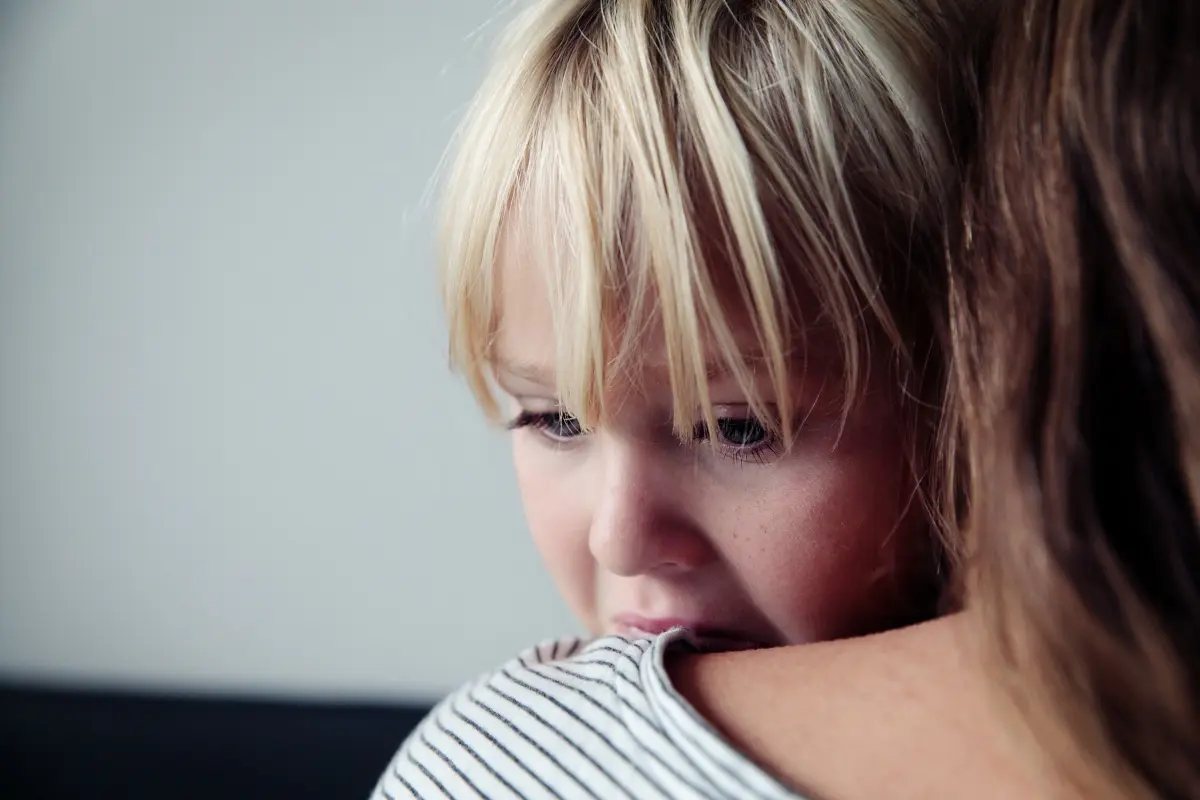



It’s 5:47pm. Dinner isn’t ready, your child has just melted down over the wrong color cup, and before you’ve even decided how to respond, your jaw is tight and your voice has already left your mouth sharper than you meant it to. Afterward, the guilt arrives fast: Why did that small thing cause such a big reaction in me? If you’ve asked that question, the truth worth holding onto is this: the child is not the wound — they are the mirror, and that small moment of guilt is actually an invitation.
If you’ve felt this, you’re not failing at conscious parenting. You’re standing at the edge of something important.
Here’s the reframe at the center of this work:
The child is not the wound. They are the mirror.
Your child’s behavior didn’t create that surge of frustration, fear, or grief. It revealed a place inside you that was already asking to be seen.
Understanding this distinction is one of the most practical tools available for reducing parenting triggers and building a calmer, more connected home.
What Parenting Triggers Are Actually Telling You
Raised voices. Shutdowns. The feeling of going from zero to overwhelmed in three seconds flat. These moments are usually labeled as failures of patience or discipline — but trauma research tells a more compassionate story.
When you’re triggered, your child isn’t generating that emotional reaction. Your nervous system is responding to a perceived threat, often shaped by relational experiences from long before you became a parent. Psychiatrist and trauma researcher Bessel van der Kolk has documented how emotional memory isn’t only cognitive — it’s stored in the body itself, which means a child’s big feelings can activate implicit memory networks formed decades earlier, long before language could even name what happened. (Read more on trauma and the body.)
This is the heart of healing through parenting.
Your child doesn’t cause the reaction. They reveal where care is still needed.
That single shift — from “they did this to me” to “this is being shown to me” — is often the first real step out of the reactivity cycle.
If this feels familiar, you may also relate to Healing the Inner Child Through Parenting, which explores how parenthood often becomes the first real invitation to meet the child you once were.

The Child as Regulator, Not Provoker
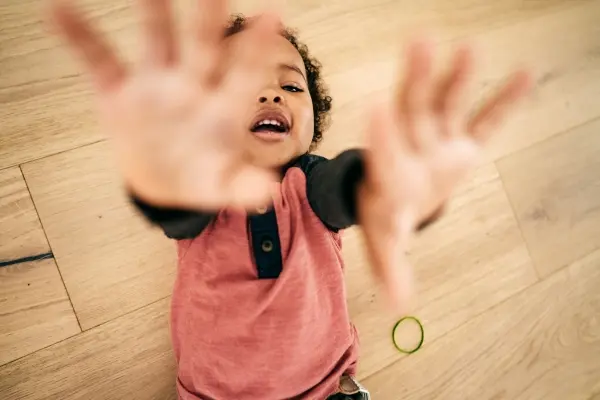
It’s tempting to see a child’s resistance as defiance aimed at you. But developmental research points elsewhere. John Bowlby’s foundational attachment theory, expanded by decades of subsequent research, shows that children are biologically wired to seek connection, comfort, and a secure base — not conflict. They look to caregivers for co-regulation: the process by which a calmer nervous system helps an overwhelmed one find its footing again. (More on Bowlby’s attachment framework.)
So when you struggle to stay regulated around your child’s emotions, it’s often because no one co-regulated you in those same moments when you were small.
This doesn’t make you broken. It makes you human.
And it moves the focus where it actually belongs: not onto fixing the child, but onto supporting the adult nervous system in the room.
This is also where conscious parenting becomes less about controlling behavior and more about practicing presence. For a deeper look at how this dynamic plays out day to day, see How Our Children Help Us Reparent Ourselves.
✨ The Little Guru Guide: The Mirror and The Message was created to help you explore these deeper layers of parenting with gentleness and awareness.
Through reflective prompts, conscious parenting insights, and soulful practices, this guide invites you to look beyond behavior and into the deeper messages our children may be carrying for us — and the parts of ourselves waiting to be reclaimed in return.
Because sometimes our children are not only asking to be understood. They are helping us understand ourselves.
✨ Explore The Mirror and The Message and continue the journey inward.
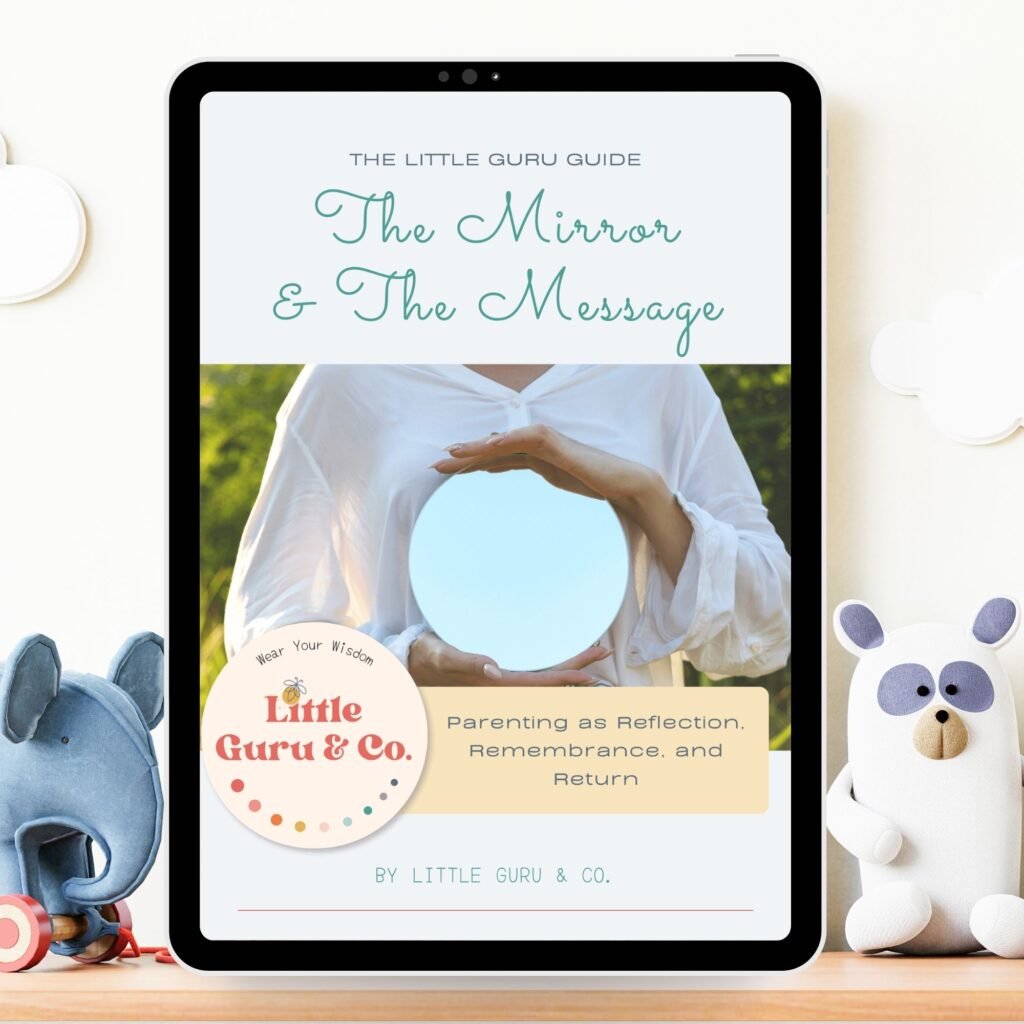
✨ The Little Guru Guide: The Mirror and The Message was created to help you explore these deeper layers of parenting with gentleness and awareness.
Through reflective prompts, conscious parenting insights, and soulful practices, this guide invites you to look beyond behavior and into the deeper messages our children may be carrying for us — and the parts of ourselves waiting to be reclaimed in return.
Because sometimes our children are not only asking to be understood. They are helping us understand ourselves.
✨ Explore The Mirror and The Message and continue the journey inward.
A Practice You Can Use in the Moment
Co-regulation research consistently points to one finding that’s genuinely useful in real time: children read your physiological state — your breath, your muscle tension, your tone — faster and more accurately than they read your words. So before you try to calm your child, try this:
1. Drop your shoulders and exhale slowly
A longer exhale than inhale signals safety to your own vagus nerve.
2. Soften your face and voice
Before you speak, even if you don’t feel calm yet. The signal matters more than the feeling arriving first.
3. Name what you see, not what you want fixed
“Your body feels really big right now” lands differently than “Calm down.”
Regulating yourself first isn’t a nice-to-have. It’s the mechanism. A child’s nervous system can’t borrow calm that isn’t there yet.
Intergenerational Healing Happens in Awareness
Some of what gets triggered in parenting didn’t start with you. Research by Dr. Rachel Yehuda and colleagues found measurable epigenetic changes in the children of Holocaust survivors — evidence that the biological imprint of trauma and stress can be passed across generations, shaping descendants’ stress responses even without a shared lived experience of the original event. (Yehuda’s research on intergenerational trauma.)
This isn’t destiny. It’s pattern — and patterns can be interrupted. The shift doesn’t require perfection. It requires noticing:
- “This reaction feels bigger than the moment.”
- “This reminds me of how I felt as a child.”
- “My body responded before my mind did.”
Awareness alone begins to soften old patterns. Choice follows close behind.
Your child is not here to retraumatize you. They are here to invite repair.
Often in the gentlest possible way: simply by being themselves.


Why Children Touch the Deepest Places in Us
Children are remarkably perceptive, and their presence — especially during need, dependency, or emotional intensity — naturally brushes against the parts of us shaped by our earliest relationships. Psychologists sometimes call this a relational echo: when a present-day relationship activates an older, unresolved template.
Not because children are demanding more of us than is reasonable. But because loving someone this much makes us vulnerable.
That vulnerability is intergenerational healing’s real starting point — not weakness, but the doorway through which old patterns finally get to be seen, and softened, in the light.
Many of us grew up experiencing discipline as punishment or rejection. By setting boundaries firmly but kindly, you model a new truth: that love and limits can co-exist.
Shifting the Question Changes Everything
Most of us default to asking, “Why is my child doing this to me?” It’s an understandable question in the heat of the moment — but it quietly assumes the child is the source.
A different question opens the door to healing instead:
“What is being stirred in me right now?”
This single reframe is foundational to conscious parenting as it’s practiced in trauma-informed and somatic approaches. It moves you out of self-blame or child-blame and into curiosity.
And children feel that shift immediately. Your nervous system is, after all, the room they’re standing in.

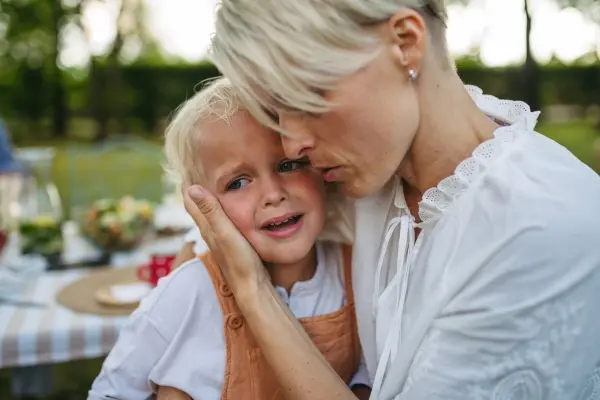
The Gift Hidden in the Mirror
When parents start tending to their own regulation — through breath, boundaries, rest, somatic practice, and support — children don’t have to carry the emotional weight of the relationship anymore.
They soften. They settle. They trust.
Not because they were fixed — but because the environment around them changed.
This is how generational cycles end. Not loudly, but quietly — one regulated moment at a time. This is how healing becomes relational, passed forward instead of passed down.
Your child was never the wound. They are the mirror, reminding you where love still wants to flow.
✨ Go Deeper With The Mirror and The Message
If this piece stirred something in you, The Little Guru Guide: The Mirror and The Message was written for exactly this moment. This 24-page digital guide reframes parenting as a sacred exchange — your child reflects your inner world, and in doing so, carries a message meant only for you.
Instead of rigid scripts, you’ll find poetic reflections, gentle language swaps, mindful practices, and affirmations that help you pause before reacting, recognize the mirror in real time, and uncover what your child’s behavior might be inviting you to see. It’s built for the parent who is becoming while they raise — not after they’ve already healed everything first.