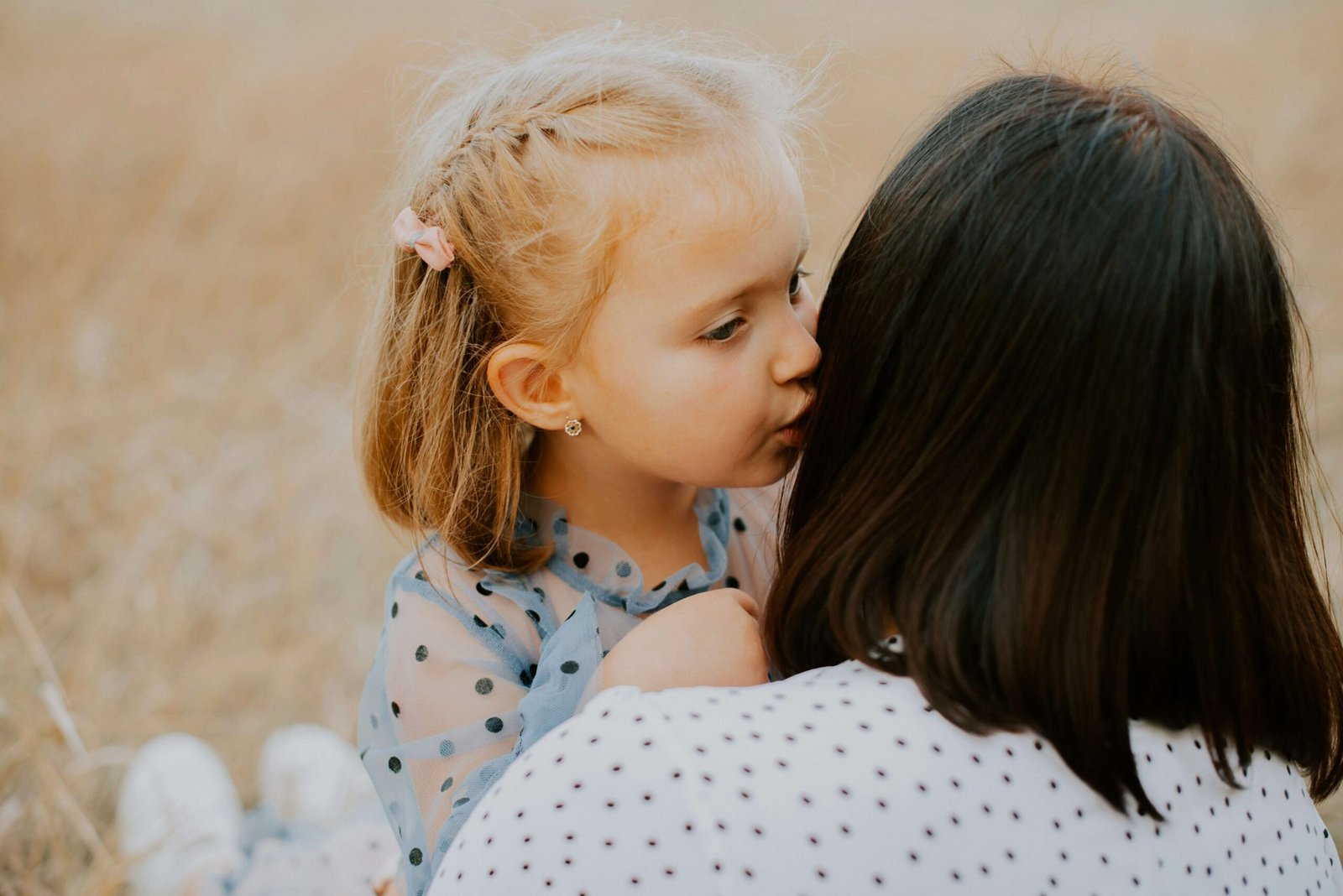




We often think of parenting as shaping a life — molding, guiding, building.
But what if that’s only half the truth?
What if soulful parenting isn’t just about shaping a child… but about remembering who they already are?
At its deepest level, parenting can become an act of remembering — a quiet return to the understanding that our children do not arrive empty. They come with a blueprint. A sacred design. A soulprint uniquely their own. They carry memory, message, and meaning long before we ever place a name upon them.
Our sacred task is not to sculpt them — but to see them.
To make space for their unfolding.
To become students of their essence.
This is parenting not as construction, but as recognition.
Not as control, but as remembrance.


They Arrive Remembering
Watch any small child:
🌟 How they speak to trees as if they are listening
🌟 How they marvel at light as if it holds secrets
🌟 How they weep with their whole being
🌟 How they ask, “Was I with you before I was born?”
These are not just developmental quirks. Developmental psychology recognizes that in early childhood — particularly during what Jean Piaget called the preoperational stage (ages 2–7) — children naturally think symbolically, imaginatively, and intuitively (you can read a simple overview of Piaget’s stages of development here). But beyond cognition, there is something deeper many parents quietly recognize — a sense that their child carries knowing.
In soulful parenting, we don’t dismiss these moments.
We witness them.
They are soul-level signals that your child came here with more than potential — they came with purpose.
If you’re longing for grounded support in honoring your child’s sacred design,
The Ages of Openness Parenting Guide offers age-by-age insight into protecting their intuition
before the world grows louder.
The Shift: From Shaping to Witnessing
Traditional parenting often asks:
“What should I make of you?”
Conscious and spiritual parenting gently asks instead:
“Who are you here to be — and how can I protect that?”
This shift changes everything.
Instead of filling your child with ideas, you begin listening for the quiet truths already inside them. Instead of correcting every divergence from expectation, you grow curious. Instead of control, you practice reverent observation.
Research in attachment theory (Dr. John Bowlby; expanded by Dr. Daniel Siegel’s work on interpersonal neurobiology) shows that children thrive when they feel seen, safe, and securely attached. When a child feels deeply understood, their nervous system settles. Their authentic self strengthens.
To witness is not passive.
It is protective.
It is powerful.


Remembering Is a Two-Way Path
Here is the wildest part of parenting as remembering:
As you hold space for your child to remember who they are — you begin remembering who you are, too.
The softness you model.
The stillness you practice.
The way you kneel beside them in the dirt to examine a stone…
These are not just parenting techniques.
They are soul retrievals.
So many of us were shaped more than we were seen. Conditioned more than we were understood. In honoring your child’s sacred design, you often begin healing your own forgotten parts.
Soulful parenting is not about perfection.
It is about presence.
Ways to Practice Soulful Parenting
Here are small, grounded ways to honor the soul your child already carries:
✨ Mirror Their Essence
Reflect back what you genuinely observe:
“You are so thoughtful.”
“You care deeply.”
“I love the way your mind works.”
This strengthens identity without imposing it.


✨ Protect Their Wonder
ou do not have to explain away every mystery.
Imagination supports cognitive development and emotional resilience. It is how children metabolize the world — how they make meaning, explore possibility, and rehearse courage in symbolic form. When a child speaks to the moon, invents unseen companions, or asks questions that stretch beyond logic, they are not escaping reality. They are engaging it in the language most natural to them.
Sometimes magic is developmentally appropriate.
Sometimes magic is medicine.
Wonder keeps the heart porous. It allows questions to remain open a little longer. It preserves humility in both parent and child — the understanding that not everything must be solved to be sacred.
In Wisdom Begins in Wonder, we explore how awe and curiosity form the foundation of early learning.
And in Guardians of Wonder, we reflect on the quiet responsibility of protecting a child’s sense of enchantment in a world that often rushes to rationalize it.
✨ Speak to Their Soul, Not Just Their Behavior
Every so often, speak to who they are beyond what they are doing.
Not praise.
Not correction.
Recognition.
“I see you.”
“There is something so steady in you.”
“You feel older than your years sometimes.”
Children feel when we are speaking to their essence rather than their performance. These moments root them in something deeper than achievement or approval.
✨ Create Space for the Unseen
Leave room for mystery in your home.
When they speak of invisible friends, dreams, past-life questions, or cosmic wonder — resist the urge to translate it into logic. Sit with it. Ask one more question. Let the moment breathe.
Soulful parenting does not rush to explain away the unseen. It protects the threshold between worlds for a little longer.
✨ Trust That There Is Meaning in Your Meeting
There are moments in parenting when something feels larger than circumstance — when a child’s presence touches an old wound, awakens a forgotten tenderness, or calls something forward in you that feels ancient.
Some call this a soul contract.
Not in a rigid or fatalistic way. But in the quiet sense that this meeting — you and this child — carries purpose beyond personality alone.
Soulful parenting, in this frame, asks a different question in hard moments:
What might we be teaching each other?
Instead of assuming failure or friction, you become curious about meaning. You begin to see challenges not as proof of inadequacy, but as invitations toward mutual becoming.
To parent this way is not to romanticize difficulty. It is to hold the possibility that even the edges of the relationship are sacred ground.
✨ Honor the Lineage Behind Them
Every child stands at the meeting point of many stories.
Yours.
Your parents’.
The generations before that.
Sometimes soulful parenting is simply pausing to consider what is moving through you — and choosing consciously what continues. It is blessing what was, releasing what no longer serves, and remembering that your child is not beginning from scratch. They are stepping into a long river of inheritance.
When you parent with this awareness, your guidance becomes less reactive and more rooted.
You are not just raising a child.
You are tending a lineage.
Final Reflection
You are not here to shape your child into something else.
You are here to remember them into who they already are.
To love them into the fullness of their light.
To guard the conditions where their blueprint remains accessible.
And in doing so, you may remember something about yourself:
That you arrived whole.
That you came with a sacred design.
That someone once whispered your name in the stars.
This is soulful parenting.
This is parenting as remembering.
And it is enough.
Honor the Blueprint They Carry…