



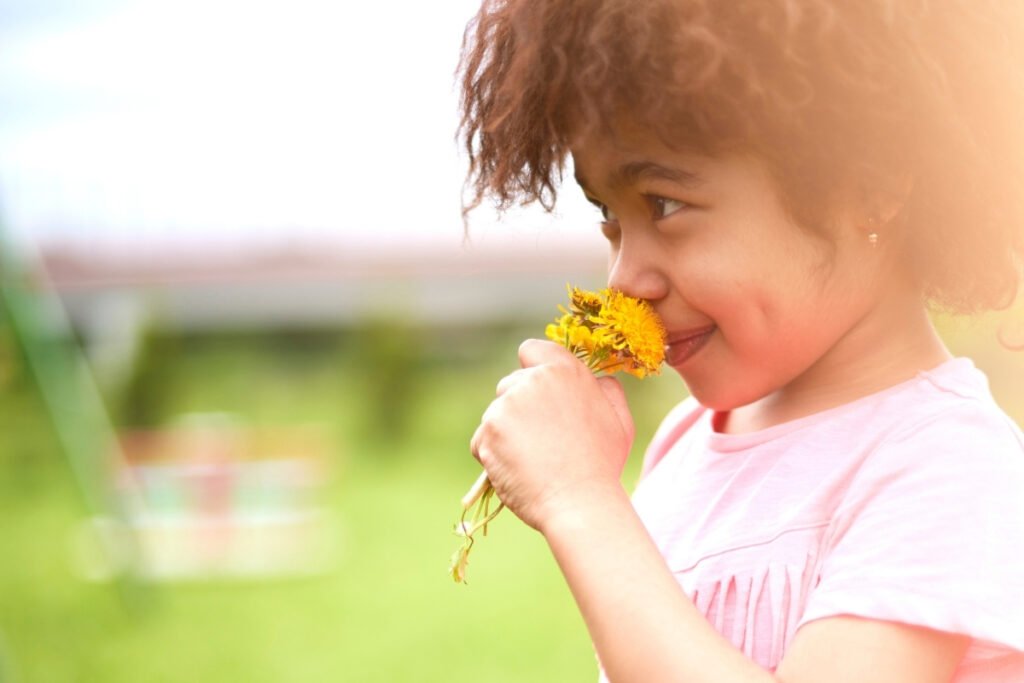
Interdependence in nature is not something we have to teach children — it is something they arrive already knowing. Before the world introduces separation, hierarchy, and self-sufficiency as ideals, children understand life as a living web: rain feeding grass, grass feeding animals, birds carrying seeds, trees offering breath. At Little Guru & Co., we see this awareness not as imagination, but as remembrance — a quiet knowing that nothing exists alone and that every living thing belongs to something greater.
This understanding is not abstract. It lives in their bodies. It shows up in the way children speak to animals, collect stones, listen to the wind, or sense when something is out of balance. Long before we explain ecosystems or biology, children feel the interconnectedness of life — because they are still close to it.
Interdependence in Nature: How Life Sustains Itself
Beneath the forest floor, trees communicate through intricate underground networks, sharing nutrients, information, and even warnings. Forests aren’t isolated nodes, but part of a vast living web. Known as mycorrhizal networks, microscopic fungal threads connect the roots of trees and other plants, allowing nutrients and chemical signals to pass between them and supporting resilience and resource sharing across species.
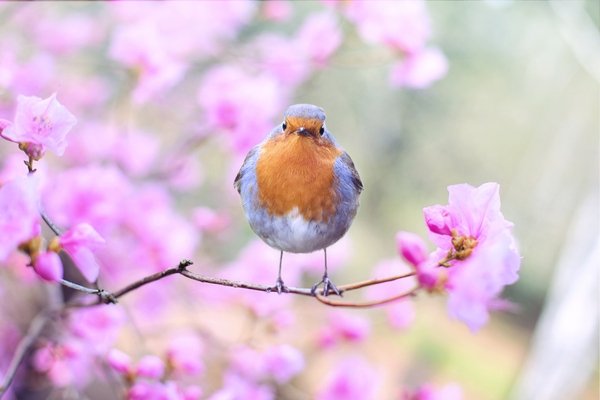
Rain feeds the grass. The grass feeds the animals. Birds carry seeds across landscapes. Trees offer oxygen — and we breathe it in without a second thought.
This is interdependence in nature: a living system where each being participates in sustaining the whole.
Nothing hoards.
Nothing dominates.
Nothing survives alone.
Nature is not a hierarchy — it is a relationship.
When we slow down enough to observe these patterns, we begin to see that interdependence is not just an ecological concept. It is a spiritual one. It is the architecture of life itself.
🌟 Explore Awaken the Light Within — a free guide for cultivating awareness, presence, and connection with your child.

Why Children Understand Interdependence So Easily
Young children don’t need formal lessons to grasp the interconnectedness of life. They see themselves as part of it instinctively. This is why a child will apologize to a flower they stepped on, worry about a worm on the sidewalk, or believe a tree can hear them.
They aren’t being fanciful.
They are being accurate.
From a Little Guru perspective, childhood is a sacred window where awareness of unity is still intact. Before the world teaches “me versus you,” children experience “us.”
As parents and caregivers, our role is not to correct this — but to protect it.
✨ Pediatric occupational therapist Angela J. Hanscom notes in Balanced and Barefoot that
“children need opportunities for free play and unstructured movement in order to develop healthy bodies, emotional regulation, and resilience”
— a reminder that connection to nature is not enrichment, but essential.
Teaching Children the Magic of Interdependence
Teaching children about interdependence doesn’t require lectures or complicated explanations. It happens through lived experience and gentle language.
Research suggests that children who feel empathy with nature — a deep emotional connection with the natural world — are more likely to develop attitudes that protect and honor the environment, a key aspect of interdependence that begins early in life.

That connection is cultivated in simple, everyday moments. You can name the cycle:
🌙 “The rain helps the garden grow.”
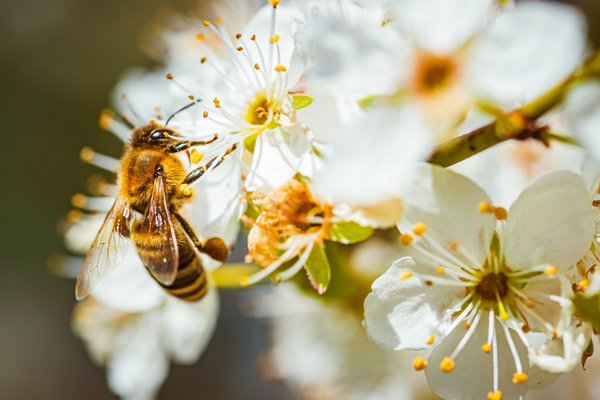
🌙 “The bees help the flowers make seeds.”
🌙 “The trees help us breathe.”
You can model reverence:
✨ Pausing to thank the earth for food.
✨ Returning something natural to where it belongs.
✨ Choosing care over convenience when possible.
And perhaps most importantly, you can reflect children back to themselves as part of the whole:
❤️ “You matter because you belong.”
❤️ “What you do affects more than just you.”
❤️ “You are connected.”
These messages become part of their inner blueprint.
Activities That Invite Children Into Interdependence
🌿 Barefoot Grounding Walks
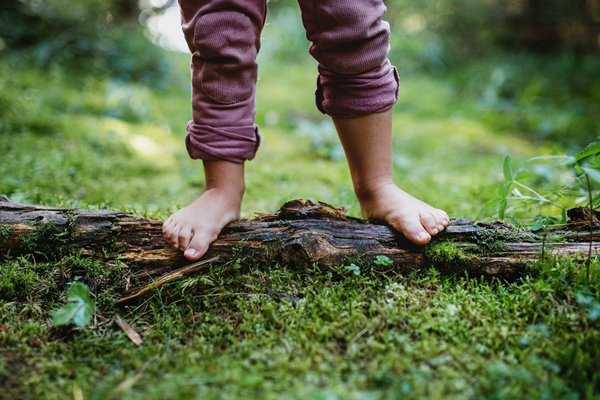
Invite children to walk barefoot on grass, soil, sand, or moss.
- Benefits: increases sensory connection, supports balance, and fosters embodied awareness of place.
(Research shows children’s development benefits from direct contact with natural environments, including cognitive, emotional, and motor skills improvements.)
🌧 Mud & Earth Projects
- Let kids play with mud, make earth sculptures, or build tiny ecosystems.
- Benefits: exposure to soil microbes supports immune development and microbial literacy.
Discovering nature with babies and young children
🐦 Bird Watching & Habitat Journaling
Sit quietly with or without binoculars, observing bird behavior and plant life, and try gently mimicking bird sounds as a way of joining the conversation.
Benefits: promotes empathy with nature and sustained attention, deepening relational awareness.
🍃 Forest Scent Walks
- Encourage children to breathe slowly and notice scents of trees, flowers, soil, and air.
- Benefits: sensory immersion linked to reduced stress and mental clarity.
🌱 Planting & Garden Projects
- Grow seeds and care for plants together, observing growth cycles.
- Benefits: direct experience with life cycles reinforces interdependence concepts.
✨ A Gentle Invitation
If this reflection resonates, you may feel called to explore how this sense of connection lives in childhood — and how it changes as children grow.
The Little Guru Guide: The Ages of Openness offers a soulful, science-backed look at the early years when intuition, imagination, and inner knowing are still wide open — along with gentle practices for tending that awareness with care.

✨ If this reflection resonates, you may feel called to explore how this sense of connection lives in childhood — and how it changes as children grow.
The Little Guru Guide: The Ages of Openness offers a soulful, science-backed look at the early years when intuition, imagination, and inner knowing are still wide open — along with gentle practices for tending that awareness with care.
Mindful Parenting in a Living World
Mindful parenting isn’t only about presence with our children — it’s about presence with life. When children see us slow down, listen, and respect the natural world, they internalize those values effortlessly.
This is ecological wisdom for children, passed not through instruction, but through example.
When we treat the earth as something alive rather than something to use, children learn stewardship instead of entitlement. They grow up understanding that care is not a burden — it is a relationship.
Time among trees isn’t just poetic — it’s physiological. Forests play a vital role in producing the oxygen we breathe and filtering pollutants from the air, and research shared by the National Forests organization shows that spending time in forested environments can support human health by reducing stress, improving mood, and strengthening overall well-being.
One Big Life With One Beating Heart
At the heart of Little Guru & Co. is a simple truth:
The life in you is the life in everything.
The breath your child takes was shaped by forests they may never visit. The water they drink has traveled through countless forms. Their body is not separate from the earth — it is made of it.
When children grow up knowing this, they don’t need to be taught empathy later. It is already woven into them.
Interdependence becomes more than a lesson.
It becomes a way of being.
A Gentle Reminder for Parents
You don’t have to do this perfectly.
Every time you choose awareness over autopilot…
Every time you honor your child’s sensitivity instead of dismissing it…
Every time you speak to them as someone who belongs to life, not above it…
You are keeping the remembering alive.
In a world that often forgets its connection, raising children who remember may be one of the most meaningful acts of care there is.
Because we are not separate threads —
we are part of one big life with one beating heart.
✨ Ready to keep walking the path of presence? Explore The Little Guru Guides — soulful resources to support you and your child in wonder, wisdom, and connection.